
N.C. Metro Mayors Coalition 2nd Annual Legislator Interview Series with Rep. David Lewis
September 23, 2014

N.C. Metro Mayors Coalition 2nd Annual Legislator Interview Series with Rep. David Lewis Our very popular legislator interview series is back again this year! We are calling this year’s interviews the “N.C. House Speaker Candidate Series on Local Government.” Our summer legislative intern Rhiannon Bell sought interviews with the rumored candidates for Speaker of the N.C. House next session to gain insight into their thoughts on local government. We hope you find these interviews enlightening.
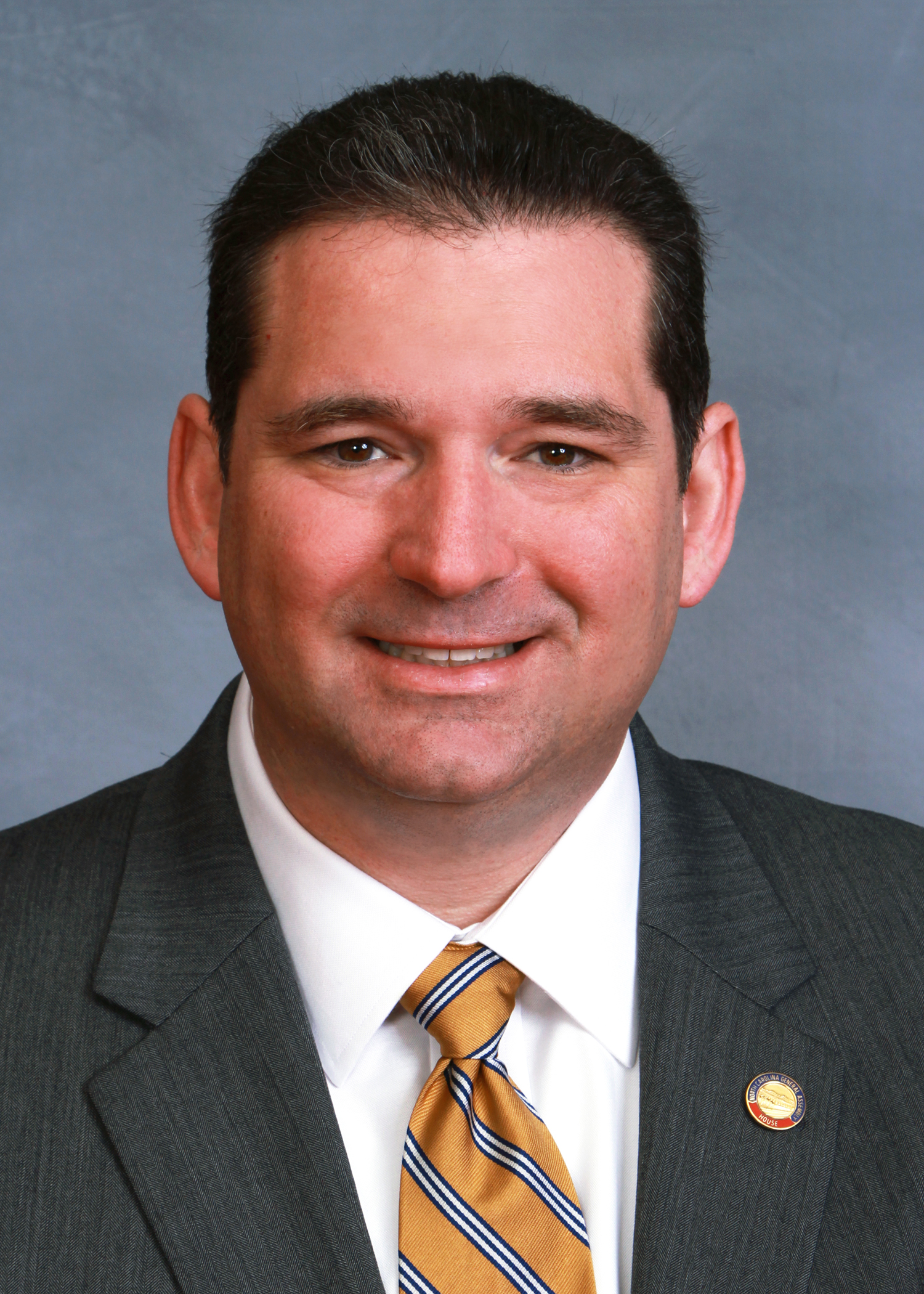
Rep David Lewis
Rhiannon’s fourth interview is with Rep. David Lewis (R-Harnett) who is in his sixth term in the House. He is a tobacco farmer and co-owner at Quality Equipment, LLC. Rhiannon recorded the interview and transcribed it verbatim below.
A big thank you to Rep. Lewis and all the House members that completed the interviews.
Thanks,
Julie White
Executive Director, N.C. Metro Mayors Coalition
1. The General Assembly has passed many bills limiting local government authority over the past few years. Do you foresee more legislation aimed at local government in future sessions or has this run its course?
I think you have to understand that local governments are in fact creations of the state and that the men and women who serve in the General Assembly are elected by people in their respective districts to do what the people want them to do. I think members respond to requests that they get from back home. There are some times that, in representing the people and doing your job, you may find that you are 100% in concert with the local government. You may find that you are somewhat in concert with them, or you may find that what the people are asking you to do is very different from what the locals intend to do.
So in terms of being able to judge how much action of this nature you may see in the future, I’m afraid that it may be very difficult to answer. You have to realize that there have been tens of thousands of local bills passed in the past 20/25 years. Sometimes they’re passed at the request of local government, and sometimes they’re passed with local government in opposition. My answer is, I think you’ll see the members of the General Assembly continue to respond to their constituents and it is my hope that we can work together better with local government. We do value and recognize the essential services that local governments provide. It would certainly be better if we could work hand-in-hand with local government, but at the same time, we each have our constituencies that we have to answer to. We are not sent up here by the local government to be specifically the representatives of the local government. We are sent up here by majority vote of the people in the district from which we come.
2. The NCGA passed legislation to sunset local government’s ability to charge a privilege license tax. What is your position on how the revenue hole should be filled?
Well I really appreciate the question, but I think it can only be answered by reminding your readers that most cities and towns in the state of North Carolina can actually expect more revenue because of the expansion of the sales tax base that was a part of the 2013 tax reform. I do recognize that some cities lose money. I think the city that loses the most money in the state, when you net the difference between the growth in the tax revenue and the privilege tax we’re currently charging, is Charlotte. But if you look at the amount of money that they’re losing, the net figure is .007% of their budget – It’s less than 1%. So I think the privilege tax is one of those issues that everyone has acknowledged and has needed to be addressed for some time.
I think that because there wasn’t an ability to reach an understanding on how you can treat the same things the same way. That’s the philosophy up here. Localities didn’t treat the same type businesses the same way and it was very confusing. It was a hodgepodge mess, and privately, even tax administrators and local cities had complained about the complexity and the frustration of trying to administer. So I do think that the repeal of the privilege tax was good policy. I think largely, any “hole” – to use your word – that was left in municipal budgets is plugged mostly. And in fact, in most municipalities, they actually see more money because of the sales tax expansion.
I think that you will see continued sales tax-based expansion to help with that. I do think that you will see ultimately an effort to renew some sort of a privilege license fee. That’s being discussed but the details are obviously not out yet. I look forward to working with your organization on that. But it just makes sense – if I own a business within the city limits and I’ve been paying my privilege tax, and my neighbor who is a stone’s throw away but happens to be outside the city limits, they aren’t paying a privilege license tax but are getting essentially the same services and are serving the same population. So I think what you will see is a broader approach to how the privilege license tax will be applied, and I think you will probably see some distribution of what’s collected back to the cities.
3. What is your position on incentives – particularly the use of incentives by local government or those used by the state to spur local economies such as film and historic tax credits?
Our goal has been to make North Carolina as competitive and attractive a place to business as we possibly can. We’ve focused on that because the more business opportunities there are, the more opportunities there are for working families to better themselves. With that said, I also think of jumping into do business with the state almost like jumping into a swimming pool, with the pool being a fully functioning business within the state and the diving board being your entry point to get into the pool. What we’ve done with our tax reform and regulatory reform is we’ve lowered the diving board and gotten it closer to the pool. We’ve made the barrier to entry in business less.
Unfortunately we still have to have some sort of push to get businesses to get the plunge and to invest in our state and provide good jobs for our people. So taxation, regulation, that’s a component in what keeps and attracts businesses, but you will still need some kind of incentive to actually get businesses to play. Texas has zero corporate and zero personal income tax, and they have probably the largest incentive fund out of anybody because it just takes that little bit extra sometimes to get folks to jump into the pool. Our state, our wonderful municipalities and our beautiful countryside and everything in between, gives us a distinct competitive advantage over the other 49, but sometimes you need that little extra push.
While I would like to say that I’m completely opposed to incentives, if North Carolina is going to compete, retain and recruit businesses, we’re going to need to continue to have them. When my son’s basketball team is down by 12 points and there are only two minutes left in the game, I’m completely opposed to the other team doing a full court press, but they have the right to do that and they’re going to keep trying to steal the ball. That’s exactly what’s going on with these other states. I think that we will continue to look for how to get the best return in the investment, whether it be with state incentives or local incentives. I think that people in the state genuinely understand that while they don’t want giveaways, they understand that if government can partner with the enterprise to create something tangible, that truly is better for their lives.
For instance, one thing that I have fought for very hard but haven’t succeeded with yet is the historic tax credit, because everyone in the community can see. It’s not a direct drawdown of state dollars. It is simply allowing a tax credit that helps offset the cost of putting in a historic building that probably would have been more economically efficient to just tear down. I have seen that in my own hometown, but I grew up in Cumberland so I have spent a lot of time in Fayetteville. I’ve watched what the historic tax credit has been able to do and truly lead a revitalization in downtown Fayetteville. That took a true public and public-private partnership to get that done. The city invested by putting the town hall down there, the state has helped with the historic tax credit, which has restored homes and businesses that once just sat empty. So I think that the public understands that there’s some good that can come from those.
Going back to my earlier response, the closer we can get the diving board to the pool, the less need for a catalyst to push someone in, so we’re going to continue to focus on lowering the barrier to entry so that businesses will be able to succeed in our state. But we’ll probably need that extra boost to push them in the pool sometimes.
4. As the state’s population continues to urbanize, how do you see the NCGA playing a role in the growing need for urban infrastructure investments in things such as roads, transit, rail, water and sewer, etc.?
Certainly I recognize, as I think many of my collegues do, that North Carolina is following the historic trend to urbanize. I think people want – to the extent they can – to live and work and shop in the same place. I do think that the state can be a constructive partner with municipalities and local government. I think you’ve seen the change in transportation formulas which try to prioritize highway and other transit spending based on where the need is.
We do have a stake in making sure that people have healthy drinking water and that infrastructure for water and sewer lines are there. You’ll continue to see the state investing in those things. I’m proud, frankly, that North Carolina has largely led the way in street and road maintenance, which takes a tremendous amount off the local governments. And even some of the local governments that participate in the street maintenance receive state grants that help with that. The state of North Carolina has done a pretty good job, I think, of partnering with municipalities through our parks and rec grants and things like that. A municipality can say, “We’d like to build a new baseball complex because our community has grown and we can attract kids and families to come in to overall improve the quality of life where they live. It’s going to be X-million dollars to do.” The state comes in and helps. Most of the time there’s a grant program that helps get those projects off the ground. I think you’ll continue to see that.
One of the things that in controversy right now at the General Assembly has to do with allowing additional revenue options for local governments to use. I said all along since 2002 when I first ran for office that the toolbox, if you will, of economic options for a local government to use for revenue sources should be uniform across all 100 counties and all municipalities. I’d like to continue moving in that way.
It’s funny, the first thing you asked me about was the different local laws, but those local laws have also empowered certain municipalities and counties to do things that other ones can’t. So that kind of both goes both ways, and I’d like to see us open up more opportunities for every municipality and every local government to have the same opportunities that the other ones have to provide essential services.
5. There have been bills introduced to remove local government ability to determine the look and feel of its own community (standardize tree ordinances bill, H150 design standards and control, standardize billboard regulations, etc). Can you speak to your philosophy on local decision-making as it pertains to cities?
I do believe that the local government is vested with the responsibility largely to establish by ordinance the requirements that it would like to see its community have. However, absent a compelling reason to do it, I think you have to default to what may be a higher order of rights. I think often times, someone’s private property is a higher order right than a tree ordinance in a particular town. I think that a lot of this friction comes simply from a failure to listen. City councils and mayors have a lot on their plate and I certainly don’t envy their job – I know how hard they work – but I think if their were more effort put forth on the local level to reach some kind of consensus, you’d see a lot less need and willingness for the General Assembly to get involved.
I would encourage, to the extent possible, for this stuff to be dealt with locally because then, if the constituent wants to go to the next step – which I know is what I would do. I’d call up the mayor or the city manager and say, “Will you explain this to me?” And when I do that, if their answer is, “Well this individual believes this, these are steps we’ve taken to try to accommodate them,” then I’m a whole lot less likely to feel compelled to intervene on their behalf than if I call and I hear, “Well, yeah we’ve heard about that, but they’re just unreasonable. We drew a line in the sand and we’re through with it.”
And again, we’re elected by the people in our districts. There was considerable debate when we went to the direct election of U.S. Senators. They used to be appointed by the state legislature, they’d go to the Senate, and they were loyal to the state legislature. Now we have direct election of the Senators, so I think increased communication between the local governments and the people that they represent, and also – it’s good now – but increased communication between the local governments and the members of the General Assembly I think would go a long way in alleviating the need for some of these local acts.